
Let’s be real for a second—exploring your sexuality and treating yourself to a little "me time" shouldn’t require a...


Do All Women Like Sex Toys? Let's Talk About Preferences, Pressure, and Pleasure
It’s a question tossed around in locker rooms, dating discussions, and Squirting Fake Horse Realistic Animal Dildo - A sometimes whispered between close friends: Do all women like sex toys?
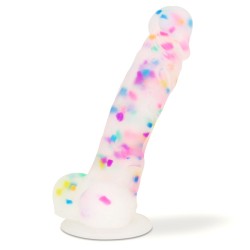
If you’ve spent any time on social media or walked past a brightly lit boutique, you might assume the answer is a resounding, universal yes. The market is flooded with sleek designs, powerful technology, Horse Dildo Silicone Fantasy Animal Sex Toy and Fister Hand & Forearm Dildo promises of mind-blowing orgasms. It can feel like if you don't own a vibrating wonder device, Noah Silicone Rabbit Vibrator you must be missing out, Cute Silicone Anal Dildo or Rocks Off 8 Ball Cock Rings somehow failing at pleasure.
But as someone who spends a lot of time thinking and The Perfect Extension writing about female sexuality, Rotation Prostate Massager with 10 Vibration I can tell you this: Steampunk Hair Buckle Cosplay Mask the answer is complex, nuanced, and beautifully personal. The real answer is no, not all women like sex toys. And that is perfectly okay.
Let’s unpack the myth of universal desire, Journey 29.5 cm/11.6" Silicone Butt Plug - Rabbit explore why preferences differ so drastically, and ultimately, normalize the fact that pleasure is defined entirely by the individual—not by the contents of their nightstand drawer.
The Myth of Universal Desire
The idea that every woman automatically loves sex toys is largely driven by culture, media, and incredibly effective marketing.
For decades, female pleasure was sidelined in mainstream narratives. When the conversation finally shifted in the late 90s and early 2000s, toys became the accessible, user-friendly symbol of sexual liberation. They were presented as the "key" to the female orgasm—a necessary tool to achieve what partners were often failing to deliver.
While this movement was crucial for normalizing female masturbation and desire, it inadvertently created a new type of pressure: the pressure to perform pleasure.
If a woman doesn’t enjoy a toy, she might feel defective, frigid, or worried that she’s "too sensitive" or "not sensitive enough." I believe it’s important to dismantle this idea immediately. Liking or disliking certain sexual tools has absolutely nothing to do with your capacity for pleasure or your alignment with sexual liberation. It simply means you have unique taste.
Why Preferences Are So Divisive
Sexuality is fluid, highly sensitive to context, and deeply rooted in personal history. A toy is just an object, and whether it enhances pleasure depends on a myriad of psycho-emotional and physical factors.
Here are some of the critical factors that influence why a woman might not gravitate toward toys:
- Sensory Input and Sensitivity
- The Role of Intimacy and Connection
- Past Experiences and Trauma
- Noise and Context
Defining Preferences: A Spectrum, Not a Binary
To understand why "not all women" is the correct answer, we have to look at pleasure in terms of a spectrum. It’s not simply a choice between using a toy or not; it’s about how and why we incorporate different forms of touch.
For simplicity, I often categorize sexual preferences into these major groups when mentoring clients about sexual compatibility:
Preference Category Description of Use Focus of Pleasure The Enthusiast Uses a variety of toys frequently (solo and partnered); views toys as essential tools for specific types of orgasm. Intensity, reliability, achieving specific physical outcomes. The Situational User Uses a small selection of toys, often for novelty, relaxation, or when addressing a specific need (e.g., deep internal stimulation). Novelty, filling specific gaps in partnered sex, targeted arousal. The Body & Partner Focused Rarely or never uses toys; finds greatest pleasure in hands, mouth, body friction, and emotional connection with a partner. Subtlety, spontaneity, emotional intimacy, variations in manual touch. The Toy-Averse Actively dislikes mechanical stimulation; finds the noise, vibration, or intensity distracting or unpleasant. Tactile sensitivity of skin, anticipation, internal emotional landscape. Normalizing the "No"
If you’ve tried toys and found that they just aren't your thing, please know you are in excellent company.
Your capacity for pleasure is not dictated by the latest gadget. It is dictated by what makes you feel safest, most present, and most sensual.
If you prefer slow, gentle hand massage to intense vibration, that is your unique superpower, and it should be celebrated.
What if my partner wants me to use them? (The Communication Factor)
This is where the conversation often gets sticky. If your partner is pushing you to use a toy, the focus needs to shift from the toy itself to communication and respect.
A good sexual relationship is built on mutual desire and safety, not prescribed methods. If you genuinely dislike a toy, express it gently but firmly.
Keys to Communicating Non-Toy Pleasure: Use "I" Statements: "I much prefer the feeling of your hands/mouth because I find the vibration too distracting." Redirect the Energy: Instead of focusing on the negative (disliking the toy), focus on the positive (what you do enjoy). Show them exactly how and where you like to be touched. Explore Alternatives (List Requirement): If the goal is intensity or novelty, toys aren't the only solution. Try: Varying textures (silks, feathers, ice). Incorporating temperature play. Focusing on non-genital erogenous zones (neck, inner thigh, feet). Sensual massage using oils. Expert Insight on Diversity
To emphasize the importance of individual difference, I often rely on the words of experts who focus on the vast range of human desire.
"The biggest mistake we make in discussing sexual wellness is assuming uniformity. A woman’s relationship with pleasure is deeply personal, often tied to her history, emotional readiness, and current environment. A sex toy is just a tool; if it doesn't fit the needs of the individual, both physically and Luminous Silicone Dildo - 04 emotionally, it will not enhance pleasure, and that is a normal, healthy response to non-fitting stimulation."
— Dr. Maya Chen, Certified Sexual Health Educator
The takeaway is clear: your pleasure is yours, and you are the only one who gets to approve the method.
Conclusion: Defining Your Desire
Do all women like sex toys? Absolutely not.
Some women find them essential for reaching orgasm; others find them overwhelming, distracting, or simply unnecessary. Some use them only when partners are away, and others use them only with a partner to intensify sensation.
The ultimate goal of sexual wellness is finding what brings you joy and peace in your body. If you love toys, embrace the buzz. If you prefer the subtle sensation of a hand guiding you, embrace the intimacy.
The best sex toy available is one that makes you feel good—and sometimes, that toy is simply a partner’s skilled touch.
Frequently Asked Questions (FAQ) About Sex Toys and Preferences Q1: Does disliking sex toys mean I’m frigid or have low libido?
A: Absolutely not. Libido refers to your overall desire and interest in sexual activity. Disliking mechanical stimulation simply means you have a preference for certain types of physical input over others. In fact, many women with high libidos prefer the direct, human element of touch.
Q2: Are sex toys only for single women?
A: No. Sex toys are widely used by people in relationships and marriages, often to introduce novelty, explore specific anatomy (like the G-spot), or to help a woman achieve orgasm reliably when her partner’s stamina is limited. They can be a fantastic way to bridge the pleasure gap.
Q3: What if I want to try them but feel overwhelmed by the options?
A: Start small and focus on silent, external stimulation. You don't have to buy a massive wand vibrator immediately. Try a small, bullet-style massager, or even just high-quality personal lubricant, which can significantly enhance manual touch without introducing intensity. Think quality over quantity.
Q4: Can toys replace the intimacy of a partner?
A: Toys can certainly provide physical release and profound pleasure, but they cannot replace the spontaneous, emotional, and psychological connection that comes from intimacy with a partner. They are tools for physical sensation, not substitutes for human connection.
Posted in:
Reviews